

What Makes a Lot Suitable for Custom Home Construction in Northern Virginia
Buying land to construct a custom home may involve finding a blank canvas. Plenty of land may be available - the right size, with wonderful views and an excellent price. But issues can arise once planning and building begin. In Northern Virginia, the zoning laws, the topography, environmental controls, utility provision, and the condition of the soil may all determine whether the piece of land is feasible to build on or not.
In buying property, home buyers must confirm whether the property is even buildable at all.
1. Zoning and Lot Legality
The first consideration is whether the house that one wants can be built on the land. Zoning laws set out setbacks, lot sizes, allowable uses, density, and other features. For instance, Fairfax County does not implement setbacks but instead advises the owners to refer to their zoning and setback law to see what they can build.
There are parcels that may appear to be land that need more clarification before construction takes place. Conditions like zoning, floodplain, environment, stormwater, erosion and sedimentation, access, and water or septic are essential for the parcel to be considered a buildable lot.
Thus, one needs to ascertain whether the zoning, valid lot, frontage, setbacks, and residential use of the parcel are known before purchasing a custom-house plan.
2. Adequate Space for the Home and Setbacks
The size of the lot is not a key factor in determining whether a home can be built on it. Setbacks, easements, environmental buffers, driveways, stormwater facilities, septic fields and other factors can reduce usable building area significantly from the total acreage.
An analysis done professionally can identify the real estate building envelope and locations where the house and its other components can be constructed. This is particularly for those properties that are either narrow, steep, oddly shaped, or wooded, because the size of the property in theory may not equate to the actual land area.
3. Topography and Drainage
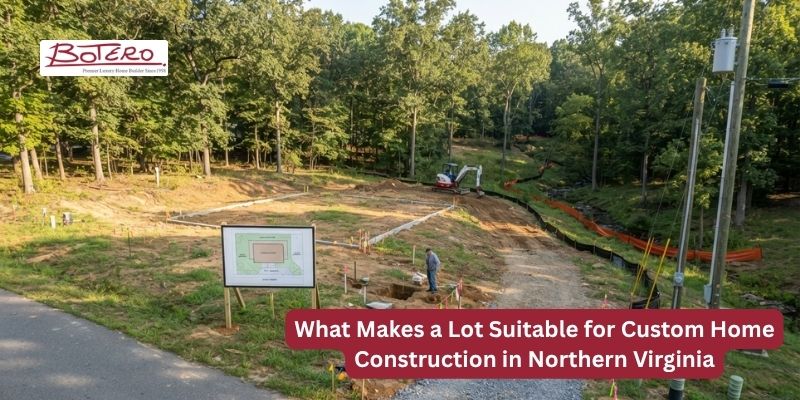
There can be great variation in topography among properties in Northern Virginia, depending on whether it is gently sloped, which would allow walk-out basement possibilities and proper site design, or steeply graded sites, which would require more excavation, retaining walls, foundations, and construction costs.
Drainage is also a critical aspect. Properly control water around the home so that it does not enter the foundation. What looks like a nice-looking site in dry weather can be problematic in wet weather.
Before construction, a detailed survey and assessment of the site development can help determine any elevation changes, existing drainage patterns, structures, easements, and other physical conditions.
4. Soil and Septic Suitability
Soil conditions can have a great impact on feasibility for construction. Soil properties affect foundation design, grading, drainage, and, if applicable, provide an onsite sewage system.
A lot that is not spacious enough or suitable for an approved septic system may not be able to be developed with an approved septic system or with any septic system in general, or may have substantial limitations with respect to development. This is something potential buyers of rural or semi-rural land would need to look into before buying.
5. Water and Sewer Access
Access to utilities can have a major impact on a project's feasibility and budget. Some properties in Northern VA are served by public water and sewer systems while others may need to have private wells and septic systems.
Check the location of utilities, availability, utility connections, easements and extension costs before buying a lot.
6. Floodplains, Wetlands, and Environmental Restrictions
The setting of a house can significantly influence the location and design of the house. Development in floodplains, wetlands, streams, resource protection areas, or other sensitive areas may be limited or may require further review and/or permits.
For example, a proposed development in or near a regulatory floodplain in Fairfax County must have a floodplain use determination. The county also designates Resource Protection Areas and wetlands as additional areas to be reviewed or approved for the environment.
Loudoun County states that the type of property on a floodplain or in a mountainside or limestone overlay district can impact the kinds of uses owners can make of the property. When you know what these limitations are early on, design can be avoided later, thus saving you money.
7. Legal and Practical Access
A custom home requires more than a buildable home site. Construction vehicles, utilities, emergency services, and future residents need to have reliable legal access to the site.
The buyer needs to check on road frontage, recorded access rights, private road agreements, shared driveways, and access easements. Fairfax County considers access to a public road to be one of the issues that must be addressed when evaluating buildability of a lot.
A property having an unclear or limited access arrangement may cause problems with permitting and construction.
8. Working With the Right Professionals
The process of evaluating a potential homesite may be more in-depth than a property inspection. The buyer might require a surveyor, architect, civil engineer, soil professional, septic designer, and other qualified professionals, depending on the property.
Additionally, you should also engage construction experts who have proper licenses. The Virginia Department of Professional and Occupational Regulation advises checking the license records of contractors and getting thorough written bids and contracts.
Turning Land into a Buildable Home Site
The perfect custom home land lot isn't always the largest or the most spectacular property. It is one in which zoning, access, utility, soil, topography, environmental conditions, and the anticipated home design can coexist under the applicable requirements.
Custom homes at Botero Homes are built on careful site evaluation and thoughtful design to meet the vision and character of the homeowner and the Northern Virginia property. A lot's potential and limitations are best understood before construction begins, making the process from buying a lot to the completed home more streamlined and easier to deal with.